The Small Hole on Padlocks: What It Really Does (Most People Don’t Know!)
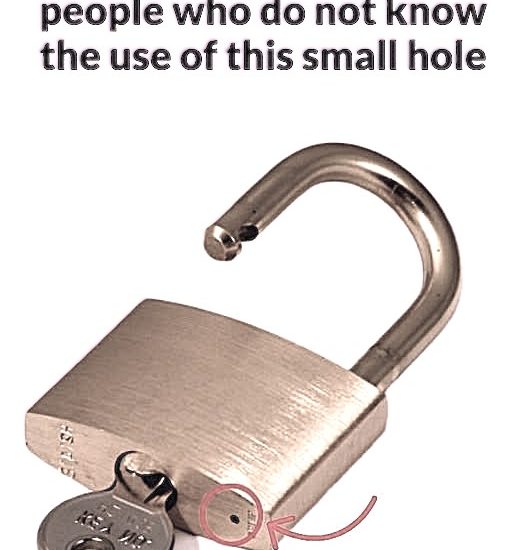
Walk up to almost any standard padlock, and you’ll notice a tiny, almost unnoticeable hole on the bottom corner of the lock. Most people see it their whole lives without ever questioning it. Some assume it’s decorative, others think it’s part of the manufacturing process.
But the truth is:
that little hole has two extremely important purposes—ones that could save you from a broken lock or even help you unlock a jammed one.
Let’s break it down.
1. It Allows Water to Drain Out
Padlocks are often used outdoors: on gates, sheds, storage units, lockers, fences, and toolboxes. When exposed to rain or moisture, water can easily seep inside the lock’s internal mechanism.
Without a drainage hole, water would:
- Sit inside the lock
- Cause rust
- Freeze during winter
- Permanently damage the spring-loaded mechanisms
The small hole at the bottom lets water drain out, preventing internal corrosion and extending the life of the lock.
This tiny feature is the reason your outdoor lock doesn’t rust shut after one rainy season.
2. It Allows Lubrication to Reach the Inner Mechanism
If your lock ever becomes stiff, difficult to turn, or refuses to open, this hole becomes your best friend.
Manufacturers designed it so you can apply:
- Lock-specific oil
- Graphite spray
- WD-40 (in emergencies)
directly into the lock’s inner pins and springs.
By applying lubricant through this hole, you can often:
- Free a stuck key
- Loosen a jammed mechanism
- Restore smooth key movement
- Prevent long-term wear
Most people spray lubricant on the key or keyhole—but the drainage hole is actually the most effective spot.
3. It Helps Maintain Air Pressure Inside the Lock
This is a less-known reason, but still useful.
When the lock is opened or closed, tiny pressure changes occur inside the mechanism.
This little hole helps:
- Equalize internal pressure
- Prevent vacuum-locking
- Avoid internal suction that can jam the device
In short:
It keeps the lock working smoother for longer.
Why Manufacturers Don’t Advertise This Feature
The simple answer?
Most people never ask.
The hole itself is small, subtle, and easy to overlook. It’s considered a standard part of padlock engineering—so manufacturers rarely emphasize it. But locksmiths and security experts know its importance.
How to Use This Knowledge to Extend the Life of Your Locks
Here’s what you can do:
✔ Check the drainage hole regularly
Make sure it’s not clogged with dirt, dust, or mud.
✔ Apply lubricant every 3–6 months
A quick spray into the hole keeps everything smooth.
✔ Don’t cover the hole with tape or paint
It needs to stay open to drain moisture.
✔ Store padlocks upright when possible
It improves drainage and prevents water buildup.
By understanding this tiny feature, you can literally double the lifespan of your locks.
In Conclusion
That small hole on the bottom of your padlock isn’t a flaw—
it’s a smart piece of engineering designed to protect your lock from rust, moisture, and mechanical failure.
Most people never learn this, but now you know the secret behind that mysterious dot.
And the next time someone asks, you’ll be the expert.
Leave a Reply